Be Still and Know That I Am God: 7 Powerful Truths From Psalm 46:10
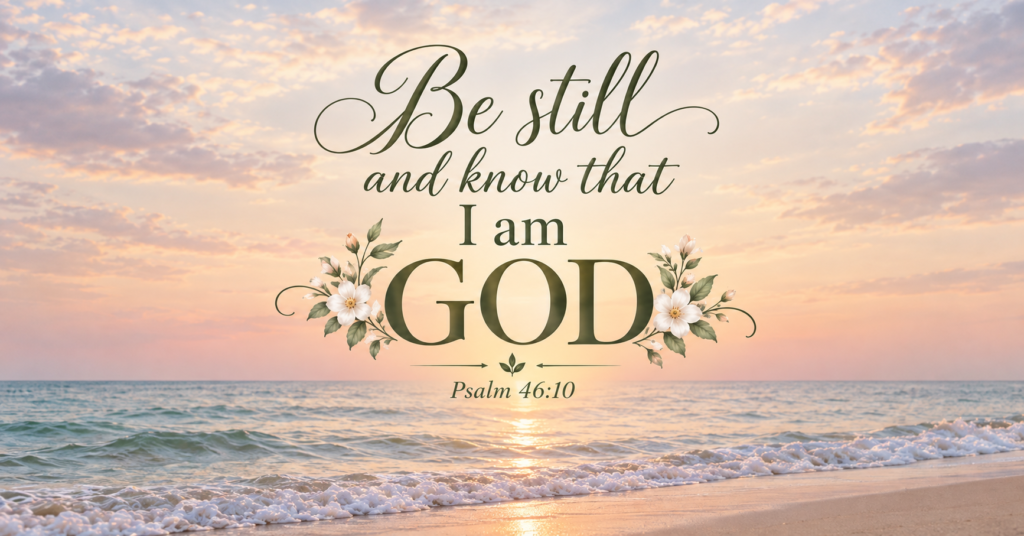
Be still and know that I am God — these eight words from Psalm 46:10 may be the most difficult command in the entire Bible. Not because they are complicated. Because they ask you to stop doing the one thing every human instinct tells you to do when life falls apart — fight, fix, control, and figure it out.
The verse is short. The instruction is simple. But living it out in the middle of a medical diagnosis, a broken relationship, a financial collapse, or a season of unanswered prayer is one of the hardest things a person can ever do.
This article explores 7 powerful truths hidden inside Psalm 46:10 — truths that will change how you read this verse and how you live it when everything around you is shaking.
Be Still and Know That I Am God — What Does This Verse Actually Mean?
Before exploring the truths inside it, we need to understand what “be still” actually means in the original Hebrew — because it does not mean what most people think.
The Hebrew word translated “be still” is raphah. It does not primarily mean “sit quietly” or “calm your emotions.” It means to let go, to release your grip, to cease striving. It carries the image of hands that have been clenched tight around something finally opening and letting it fall.
The full verse reads: “Be still, and know that I am God; I will be exalted among the nations, I will be exalted in the earth.” (Psalm 46:10, NIV)
The context of Psalm 46 makes the command even more striking. This psalm was not written in a peaceful moment. It was written in the middle of upheaval — mountains falling into the sea, nations raging, kingdoms collapsing. The command to be still was not spoken into a calm situation. It was spoken into chaos.
That is the first and most important thing to understand about this verse: God was not telling His people to be still because everything was fine. He was telling them to be still because He is God — and that fact does not change when everything is falling apart.
7 Powerful Truths Hidden Inside “Be Still and Know That I Am God”
Each word in this verse carries more weight than it appears. Here are 7 truths that open up when you slow down and look closely.
Truth 1 — Stillness Is a Command, Not a Suggestion
In Psalm 46:10, “be still” is written as a command — not a gentle invitation. God is not saying “it might be nice if you could relax.” He is giving a direct instruction to people who are watching their world fall apart.
This matters because we often treat stillness as optional — something we will get to when things slow down, when the crisis passes, when we finally have time. But God places stillness as a prerequisite to knowing Him deeply. You cannot truly know that He is God while your hands are clenched around the need to control the outcome.
The command is not passive. Choosing stillness in the middle of chaos is one of the most active and difficult decisions a person can make. It takes more strength than fighting. It requires more faith than fixing.
Truth 2 — Stillness and Knowledge Are Connected
The verse does not say “be still” and “be still and know” are separate ideas. They are directly linked. The stillness is what makes the knowing possible.
The Hebrew word for “know” here is yada — which means intimate, experiential knowledge. Not intellectual understanding. Not theological information. The kind of knowing that comes from deep personal experience with someone.
God is saying: when you release your striving and become still, you will know Me — not just know about Me — in a way that is not possible while you are consumed with trying to manage your circumstances.
This is why busy, anxious, striving seasons often feel spiritually dry. It is not that God has moved. It is that the noise of our own efforts has made it impossible to experience the knowing He is offering.
Truth 3 — The Verse Is Addressed to Both Enemies and Believers
Bible scholars note that in Psalm 46:10, the command “be still” is addressed to two groups — God’s people who are afraid, and the nations who are raging against them. To His people He says: stop striving and trust Me. To the nations He says: cease your opposition, because I will be exalted regardless.
This dual audience reveals something extraordinary about the verse. It is simultaneously a comfort and a warning — an invitation to rest and a declaration of sovereignty. The same words that offer peace to the trusting heart are a promise of defeat to every force that opposes God.
Whatever is threatening your life right now is also included in that second address. God is not just speaking to you. He is speaking to the thing that has you afraid.
Truth 4 — “I Am God” Is the Reason, Not Just the Statement
The phrase “know that I am God” is not simply an identification. It is the reason the command to be still makes sense. The logic is: be still because — I am God.
In other words, your stillness is justified by who He is. You can release your grip because the One who holds everything is infinitely more capable than your striving. You can stop fighting for control because the One who has ultimate control is entirely trustworthy.
Every time anxiety tells you that you need to do more, figure it out faster, and stay in control, the verse answers back: know that I am God. That knowledge — really knowing it, not just reciting it — is what makes genuine stillness possible.
Truth 5 — Stillness Does Not Mean Inactivity
One of the most common misunderstandings about this verse is that “be still” means do nothing. It does not. The Hebrew raphah is about releasing fearful, frantic striving — not about refusing to act responsibly.
You can take a doctor’s appointment and be still. You can have a difficult conversation and be still. You can make a decision and be still. The stillness is an internal posture, not an external paralysis.
The difference is in the grip. Are you acting out of trust, or are you acting out of the desperate need to control what only God can control? Stillness releases the outcome. Action continues. But the frantic energy behind the action is replaced by faith.
Truth 6 — The Whole Psalm Gives the Verse Its Full Power
Psalm 46:10 is almost always quoted alone — but reading the whole psalm transforms the verse. The psalm opens with: “God is our refuge and strength, an ever-present help in trouble.” (Psalm 46:1, NIV)
It then describes catastrophic circumstances — earthquakes, roaring seas, falling mountains, warring nations. And in the middle of all of it, verse 7 appears as a refrain: “The LORD Almighty is with us; the God of Jacob is our fortress.”
By the time verse 10 arrives, it is not a quiet whisper. It is a declaration spoken from inside a storm — after the psalmist has already declared who God is, what He has done, and where He stands. “Be still and know that I am God” lands with full weight when you understand the chaos it was spoken into.
Truth 7 — This Verse Points to a Future Final Stillness
The end of Psalm 46:10 extends the verse beyond the present moment: “I will be exalted among the nations, I will be exalted in the earth.” This is a future promise — a declaration that there is a day coming when every opposing force will be silenced and God will be recognized as God by all.
The stillness God calls you to now is a small echo of that final stillness. Every time you choose to release your striving and trust Him in the middle of chaos, you are living out in miniature what will one day be true on a cosmic scale — that He is God, and His exaltation is certain.
Your stillness today is an act of faith in that future. It is saying: I believe the ending of the story before I can see it.
How to Actually Practice “Be Still and Know That I Am God” in Daily Life
Knowing what the verse means and living it are two different things. Here are practical ways to practice genuine stillness before God — not as a technique, but as a posture of faith.
Start with honesty. Stillness does not require pretending you are not afraid. Bring exactly what you are feeling to God — the fear, the confusion, the frustration, the doubt. Psalm 62:8 says “pour out your hearts to him.” Stillness begins with honesty, not performance.
Identify what you are gripping. Ask yourself: what am I trying to control right now that is beyond my control? Name it specifically. The moment you name it, you can begin the process of releasing it — which is exactly what raphah calls you to do.
Replace anxiety with declaration. When fear rises, speak truth out loud. “God is my refuge and strength.” “He will be exalted.” “I will know that He is God.” Speaking truth into anxious moments is one of the most practical forms of stillness — redirecting your mind from what might happen to who God is.
Limit the noise deliberately. Stillness is impossible in constant noise. This does not mean hours of silence every day — it means intentional moments of quiet where the podcast, the scroll, and the background noise stop and you simply wait before God. Even five minutes of deliberate quiet can become a significant practice.
Return to the whole psalm. When Psalm 46:10 feels impossible, back up to verse 1. Read the entire psalm slowly. Let the whole arc — God as refuge, God as fortress, God as the one who makes wars cease — carry you to verse 10 with more faith than if you started there.
Bible Verses That Expand the Meaning of Psalm 46:10
Several other passages in Scripture echo and expand what Psalm 46:10 teaches — and reading them together builds a fuller picture of what God-directed stillness looks like.
Exodus 14:14 (NIV) — “The LORD will fight for you; you need only to be still.” Spoken to Israel at the Red Sea with the Egyptian army behind them, this verse shows that stillness is possible even when the threat is immediate and the escape route is invisible.
Isaiah 30:15 (NIV) — “In repentance and rest is your salvation, in quietness and trust is your strength.” Here God connects stillness directly with strength — the opposite of what human instinct believes. Striving feels strong. God says quietness and trust are where real strength is found.
Psalm 37:7 (NIV) — “Be still before the LORD and wait patiently for him.” This verse adds the dimension of waiting — stillness is not just a one-time release, it is a sustained posture of patient trust when the answer is delayed.
Matthew 11:28–29 (NIV) — “Come to me, all you who are weary and burdened, and I will give you rest. Take my yoke upon you and learn from me, for I am gentle and humble in heart, and you will find rest for your souls.” Jesus extends the same invitation in the New Testament — release the burden, receive rest, know Me in the process.
Frequently Asked Questions About “Be Still and Know That I Am God”
Where is “be still and know that I am God” in the Bible?
It is found in Psalm 46:10. The full verse reads: “Be still, and know that I am God; I will be exalted among the nations, I will be exalted in the earth.” It is part of a psalm attributed to the Sons of Korah and is set in the context of upheaval, chaos, and threatening nations — making the command to be still all the more significant.
What does “be still” mean in Hebrew?
The Hebrew word is raphah, which means to let go, release, cease striving, or drop. It carries the image of relaxing a grip that has been held too tightly. It is not primarily about physical silence or inactivity — it is about releasing the desperate need to control what is beyond human control and trusting God with the outcome.
What does it mean to “know” that He is God?
The Hebrew word for “know” is yada, which means intimate, experiential knowledge — the kind of deep personal knowing that comes from relationship and lived experience, not just intellectual information. God is not asking people to acknowledge His existence. He is inviting them into a deeper experience of who He actually is — which becomes possible when striving stops.
Does “be still” mean Christians should do nothing during a crisis?
No. Stillness in Psalm 46:10 refers to an internal posture of trust, not external inactivity. A person can take responsible action — make appointments, have conversations, make decisions — while practicing genuine stillness. The difference is in the motivation: acting from trust rather than from frantic, fear-driven striving to control an outcome that belongs to God.
Is Psalm 46:10 a promise or a command?
It is both. The “be still” portion is a command — addressed to both God’s people and to the opposing nations. The “know that I am God” portion contains both a command (know this truth) and an implicit promise (if you release your striving and turn to Me, you will experience the intimate knowledge of who I am). The final line — “I will be exalted among the nations” — is a direct promise about the future.
Why is Psalm 46:10 so popular?
Because it speaks directly into the experience every person faces at some point — the feeling that circumstances are out of control and anxiety is overwhelming. The verse offers not a formula for fixing the situation, but a redirection of focus: away from the chaos, toward the unchanging character of God. In a world of noise, speed, and constant pressure to perform, the invitation to “be still” resonates deeply with people who are exhausted by their own striving.
What is the context of Psalm 46?
Psalm 46 was written by the Sons of Korah and describes a scene of extreme upheaval — earthquakes, roaring seas, collapsing mountains, warring nations. Despite this chaos, the psalmist declares that God is a refuge, a strength, and an ever-present help. The refrain in verses 7 and 11 — “The LORD Almighty is with us; the God of Jacob is our fortress” — frames the famous command in verse 10. The “be still” of verse 10 is not spoken into a peaceful setting. It is spoken into catastrophe — which is exactly when it is hardest and most needed.
How can I practice “be still and know that I am God” when I feel anxious?
Start with honesty — bring your fear to God exactly as it is. Then identify specifically what you are trying to control and name it. Speak truth aloud about who God is. Create intentional moments of quiet where you stop filling the silence and simply wait. Return to the whole of Psalm 46, not just verse 10, so that the full declaration of God’s character carries you to the command with greater faith. Stillness is a practice, not a one-time achievement — and it deepens over time as trust is built through repeated experience of God’s faithfulness.
Final Thought: The Stillness Is Not the End — It Is the Beginning
Most people read “be still and know that I am God” as a verse about rest. And it is. But it is also a verse about encounter.
The stillness is not the destination. It is the door. When you release the striving, drop the need to control, and turn your full attention to the God who is already present — the knowing begins. Not knowing about Him. Knowing Him. The intimate, experiential yada kind of knowing that changes how you see everything else.
The mountains are still falling in your life. The nations are still raging. The circumstances have not changed. But you have turned from them — toward the One who spoke the world into existence, who parted the Red Sea, who raises the dead, who will be exalted in all the earth.
And in that turning, something shifts. Not always the circumstances. But always the person standing inside them.
Be still and know that I am God. Eight words. A lifetime of practice. And a promise that the God who gave the command will also provide the grace to obey it.
To read the complete Psalm 46 in its original context, you can find the full text of Psalm 46 on Bible Gateway — reading all eleven verses together gives this famous command its full and powerful meaning.
LOOKING FOR SOME MORE ENGAGING CONTENT: