Communion Scripture: 20 Powerful Bible Verses That Reveal the Full Depth of the Lord’s Supper
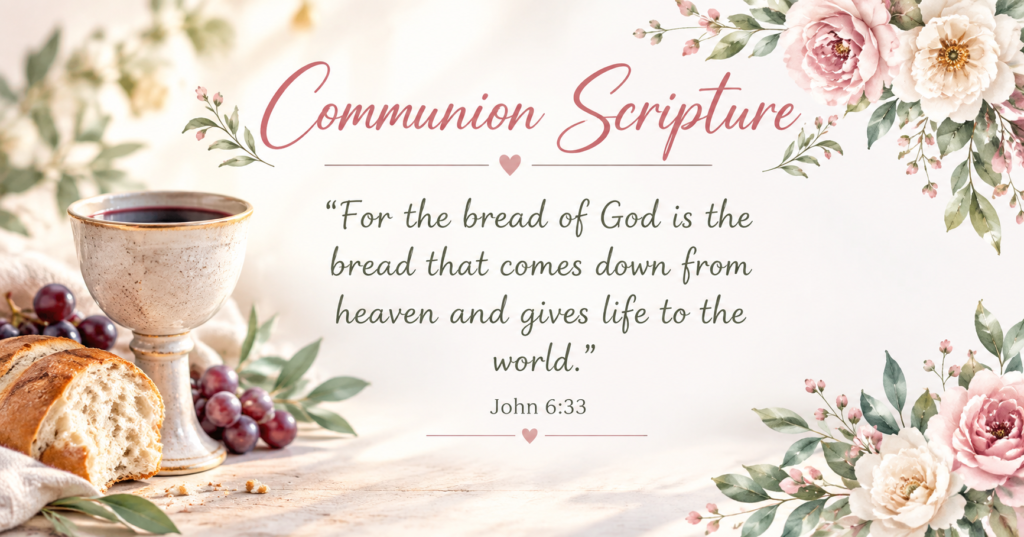
Every communion scripture in the New Testament points to the same sacred moment — a borrowed upper room, a Passover table, bread broken and cup poured, and the Son of God saying: do this in remembrance of Me. What happened at that table on the night Jesus was betrayed is the foundation of the most widely practiced sacrament in Christian history. And yet for many believers, communion has become familiar without becoming deep.
Communion scripture is not limited to the words of institution spoken at the Last Supper. It runs through the Gospels, through Paul’s letters, through the theology of covenant, sacrifice, and community. Understanding what the Bible actually says about communion — not just the tradition your church practices, but the full scriptural weight behind it — transforms what could be a routine ritual into one of the most profound encounters with the living Christ available to any believer.
These 20 communion scripture selections cover the institution, the meaning, the self-examination, the unity of believers, and the future fulfillment of the Lord’s Supper — so that every dimension of communion is grounded in what God’s Word actually says.
Communion Scripture — The Institution of the Lord’s Supper
The most foundational communion scripture in all of the Bible is the account of the Last Supper — the night Jesus established what believers would practice for the next two thousand years. These passages record His exact words.
1. Luke 22:19–20 (NIV)
“And he took bread, gave thanks and broke it, and gave it to them, saying, ‘This is my body given for you; do this in remembrance of me.’ In the same way, after the supper he took the cup, saying, ‘This cup is the new covenant in my blood, which is poured out for you.'”
This is the communion scripture from which every Lord’s Supper draws its authority. Two elements, two declarations: this is my body — given for you. This cup is the new covenant in my blood — poured out for you. The personal pronouns matter enormously. Jesus did not say given for humanity in the abstract. He said given for you. Communion is not a theological concept to affirm — it is a personal act of remembrance for what was done specifically for the person receiving it.
2. Matthew 26:26–28 (NIV)
“While they were eating, Jesus took bread, and when he had given thanks, he broke it and gave it to his disciples, saying, ‘Take and eat; this is my body.’ Then he took a cup, and when he had given thanks, he gave it to them, saying, ‘Drink from it, all of you. This is my blood of the covenant, which is poured out for many for the forgiveness of sins.'”
Matthew’s communion scripture account adds a crucial theological detail: for the forgiveness of sins. The blood of the new covenant accomplishes what the blood of Passover lambs could only picture — the actual removal of sin. Every time communion is taken, this is what is being declared: the forgiveness purchased by Christ’s blood is real, it is sufficient, and it covers the sin of all who receive it in genuine faith.
3. Mark 14:22–24 (NIV)
“While they were eating, Jesus took bread, and when he had given thanks, he broke it and gave it to his disciples, saying, ‘Take it; this is my body.’ Then he took a cup, and when he had given thanks, he gave it to them, and they all drank from it. ‘This is my blood of the covenant, which is poured out for many,’ he said to them.”
Mark’s communion scripture version is the most concise — and the phrase “they all drank from it” carries significant weight. All of them. Including Judas, who would betray Jesus within hours. Communion is not reserved for the spiritually impressive. It is offered to all gathered at the table — which is itself a picture of the grace that communion declares.
4. 1 Corinthians 11:23–26 (NIV)
“For I received from the Lord what I also passed on to you: The Lord Jesus, on the night he was betrayed, took bread, and when he had given thanks, he broke it and said, ‘This is my body, which is for you; do this in remembrance of me.’ In the same way, after supper he took the cup, saying, ‘This cup is the new covenant in my blood; do this, whenever you drink it, in remembrance of me.’ For whenever you eat this bread and drink this cup, you proclaim the Lord’s death until he comes.”
This is the oldest written account of the institution of communion — Paul wrote 1 Corinthians before any of the Gospels were written. This communion scripture adds the phrase “until he comes” — framing every Lord’s Supper as an act of proclamation that looks forward as well as backward. Communion remembers the cross and anticipates the return. It is simultaneously memorial and living hope.
Communion Scripture — The Meaning of the Bread and the Cup
What does communion actually mean? These communion scripture passages go beyond the institution to explain the theological significance of what the bread and cup represent — and what happens when believers receive them in genuine faith.
5. 1 Corinthians 10:16–17 (NIV)
“Is not the cup of thanksgiving for which we give thanks a participation in the blood of Christ? And is not the bread that we break a participation in the body of Christ? Because there is one loaf, we, who are many, are one body, for we all share the one loaf.”
The Greek word Paul uses here is koinonia — participation, fellowship, genuine sharing. This communion scripture reveals that taking the Lord’s Supper is not merely symbolic remembrance. It is genuine participation in what Christ accomplished. And the one loaf shared by many produces something remarkable: it makes the many one body. Communion is simultaneously vertical (participation in Christ) and horizontal (unity with each other).
6. John 6:53–56 (NIV)
“Jesus said to them, ‘Very truly I tell you, unless you eat the flesh of the Son of Man and drink his blood, you have no life in you. Whoever eats my flesh and drinks my blood has eternal life, and I will raise them up at the last day. For my flesh is real food and my blood is real drink. Whoever eats my flesh and drinks my blood remains in me, and I am in them.'”
This communion scripture — spoken before the Last Supper — reveals the profound spiritual reality behind the practice. Jesus is describing the union that communion signifies: remaining in Him, and He in you. The language is deliberately startling because what it describes is extraordinary. Communion is the physical enactment of an ongoing spiritual reality: the life of Christ received continuously into the life of the believer.
7. Hebrews 9:14–15 (NIV)
“How much more, then, will the blood of Christ, who through the eternal Spirit offered himself unblemished to God, cleanse our consciences from acts that lead to death, so that we may serve the living God! For this reason Christ is the mediator of a new covenant.”
This communion scripture grounds the cup in the theological reality of the new covenant. The blood of Christ does what no animal sacrifice could do — it cleanses the conscience, not just the ceremonial standing. Every time communion is taken, the cup represents this cleansed conscience: guilt removed, record cleared, relationship fully restored. This is what the new covenant accomplished — and what the cup declares every time it is received.
8. Romans 5:8 (NIV)
“But God demonstrates his own love for us in this: While we were still sinners, Christ died for us.”
This communion scripture captures the entire gospel in one sentence and should sit in the heart of every person who receives the bread. While we were still sinners. Not after we cleaned ourselves up. Not when we became deserving. While. The communion table is for sinners — which is the only category of people who have ever existed. Come because you need it. Come because He came for exactly where you are.
Communion Scripture — Self-Examination Before the Table
Paul’s most extensive communion scripture passage includes a serious warning about approaching the table without proper discernment — and a call to self-examination that most churches read aloud before every Lord’s Supper.
9. 1 Corinthians 11:27–29 (NIV)
“So then, whoever eats the bread or drinks the cup of the Lord in an unworthy manner will be guilty of sinning against the body and blood of the Lord. Everyone ought to examine themselves before they eat of the bread and drink from the cup. For those who eat and drink without discerning the body of Christ eat and drink judgment on themselves.”
This communion scripture is the most sobering in the New Testament — and the most misunderstood. Paul is not saying that only perfect people should take communion. He is saying that communion must be received with genuine discernment — recognizing what it represents and examining your heart honestly before you receive it. The Corinthians were treating the Lord’s Supper like an ordinary meal, some eating while others went hungry. The unworthiness was in the manner of receiving, not in the moral standing of the receiver.
10. Psalm 51:10 (NIV)
“Create in me a pure heart, O God, and renew a steadfast spirit within me.”
This prayer of David — written after his most catastrophic moral failure — is one of the most appropriate communion scripture passages to pray before receiving the Lord’s Supper. It reveals what genuine preparation looks like: not the achievement of perfection, but the honest confession of need and the genuine desire for renewal. Approaching the table with this prayer on your lips is approaching it worthily — not because you have earned your place, but because you know you need it.
11. 1 John 1:7–9 (NIV)
“But if we walk in the light, as he is in the light, we have fellowship with one another, and the blood of Jesus, his Son, purifies us from all sin. If we claim to be without sin, we deceive ourselves and the truth is not in us. If we confess our sins, he is faithful and just and will forgive us our sins and purify us from all unrighteousness.”
This communion scripture is the New Testament’s clearest statement on what happens when sin is honestly brought to the table: the blood of Jesus purifies from all sin. Not some sin. Not the acceptable ones. All. The person who approaches communion with genuine confession rather than performance is the person who receives the full weight of what the cup represents.
Communion Scripture — The Unity of Believers at the Table
One of the most overlooked dimensions of communion scripture is its emphasis on community. The Lord’s Supper is not only an individual act of remembrance — it is a corporate declaration of the unity of the body of Christ across every division the world imposes.
12. Acts 2:42 (NIV)
“They devoted themselves to the apostles’ teaching and to fellowship, to the breaking of bread and to prayer.”
The breaking of bread — communion — appears in the earliest description of church life as one of the four defining practices of the first Christian community. This communion scripture places the Lord’s Supper alongside teaching, fellowship, and prayer as a non-negotiable rhythm of gathered believers. It was not an occasional observance added to a church calendar. It was a defining practice of what it meant to be the church at all.
13. Acts 20:7 (NIV)
“On the first day of the week we came together to break bread. Paul spoke to the people and, because he intended to leave the next day, kept on talking until midnight.”
The early church gathered specifically to break bread. This communion scripture reveals that the Lord’s Supper was the central purpose of the weekly gathering, not an add-on to the teaching. Paul spoke until midnight because he was leaving the next day — but the reason they gathered in the first place was the breaking of bread. Communion was first, not supplementary.
14. 1 Corinthians 12:13 (NIV)
“For we were all baptized by one Spirit so as to form one body — whether Jews or Gentiles, slave or free — and we were all given the one Spirit to drink.”
This communion scripture reveals the radical unity that the Lord’s Supper declares and enacts. At the communion table, every social, cultural, ethnic, and economic distinction is irrelevant. Jew and Gentile, slave and free — all receive the same bread and the same cup. Communion is the most democratic act in Christian community: everyone receives the same gift from the same Lord, regardless of any distinction the world assigns to them.
Communion Scripture — Looking Forward to the Future Table
Every communion scripture that contains the phrase “until he comes” points to a dimension of the Lord’s Supper often overlooked — its forward-looking hope. Communion is not only a memorial looking back. It is a declaration of expectation looking ahead.
15. Matthew 26:29 (NIV)
“I tell you, I will not drink from this fruit of the vine from now on until that day when I drink it new with you in my Father’s kingdom.”
Jesus made a promise at the Last Supper that connects every communion to a future table. This communion scripture reveals that the Lord’s Supper is not only about His death — it is about His return and the feast that follows. Every time communion is taken, believers are not only remembering the cross. They are anticipating the table at which Jesus has promised to sit and drink with His people in the kingdom of God.
16. Revelation 19:9 (NIV)
“Then the angel said to me, ‘Write this: Blessed are those who are invited to the wedding supper of the Lamb!’ And he added, ‘These are the true words of God.'”
First Corinthians 11:26 says believers proclaim the Lord’s death “until he comes.” This Revelation communion scripture reveals what “until he comes” is moving toward: the wedding supper of the Lamb — the final, eternal communion at which every broken table will be made whole. Every earthly communion is a rehearsal for this feast. Every time the bread is broken, the eternal banquet is drawing one step closer.
17. Isaiah 25:6 (NIV)
“On this mountain the LORD Almighty will prepare a feast of rich food for all peoples, a banquet of aged wine — the best of meats and the finest of wines.”
This Old Testament communion scripture prophecy — written seven centuries before the Last Supper — points to the same eschatological feast. God has always been moving toward a table. The Passover was a table. The Last Supper was a table. Every Lord’s Supper is a table. And the end of the story is a feast prepared by God Himself for all peoples. Every time you receive communion, you are eating within this larger eternal story.
Communion Scripture — The Covenant Foundation
The cup of communion is specifically called “the new covenant in my blood.” These communion scripture passages reveal what that new covenant is, why it matters, and what it replaced.
18. Jeremiah 31:31–34 (NIV)
“‘The days are coming,’ declares the LORD, ‘when I will make a new covenant with the people of Israel and with the people of Judah. It will not be like the covenant I made with their ancestors when I took them by the hand to lead them out of Egypt, because they broke my covenant, though I was a husband to them,’ declares the LORD. ‘I will put my law in their minds and write it on their hearts. I will be their God, and they will be my people… For I will forgive their wickedness and will remember their sins no more.'”
The new covenant that communion scripture declares was promised here by Jeremiah — seven centuries before Jesus established the Lord’s Supper. Every cup taken in communion is the fulfillment of this specific prophecy: a covenant written on hearts, not stone, with forgiveness as its foundation and God’s presence as its permanent promise. The cup holds all of this history inside it.
19. Exodus 12:13 (NIV)
“The blood will be a sign for you on the houses where you are, and when I see the blood, I will pass over you.”
The Passover is the Old Testament foundation for every New Testament communion scripture. Jesus established the Lord’s Supper at a Passover meal — deliberately connecting the two. The lamb whose blood protected Israel from death pointed forward to the Lamb of God whose blood protects from eternal death. Communion is the New Covenant Passover: the blood applied, the destroyer passing over, the people of God delivered not just from Egypt but from sin itself.
20. Hebrews 10:19–22 (NIV)
“Therefore, brothers and sisters, since we have confidence to enter the Most Holy Place by the blood of Jesus, by a new and living way opened for us through the curtain, that is, his body, and since we have a great priest over the house of God, let us draw near to God with a sincere heart and with the full assurance that faith brings, having our hearts sprinkled to cleanse us from a guilty conscience and having our bodies washed with pure water.”
This is the final and most complete communion scripture in this collection — because it describes what the blood of Jesus has permanently accomplished: open access to God’s presence, confidence to approach the Most Holy Place, full assurance of faith, cleansed conscience. Every time you receive communion, you are enacting what this passage describes — drawing near to God with confidence through the body and blood of the great High Priest who opened the way.
When to Use These Communion Scripture Selections
These communion scripture passages are appropriate for far more contexts than Sunday morning services alone.
For leading communion in a church service: The institution passages — Matthew 26:26–28, Luke 22:19–20, and 1 Corinthians 11:23–26 — are the most appropriate for the moment of serving the elements. Vary them week to week so the words remain fresh rather than routine.
For personal preparation before receiving: Psalm 51:10, 1 John 1:7–9, and Romans 5:8 are ideal for the moments of quiet reflection before the bread and cup are served. They create the posture of honest need and genuine gratitude that makes communion meaningful rather than mechanical.
For home communion with family or small groups: Luke 22:19–20 and 1 Corinthians 11:23–26 together provide both the institution account and the theological framing needed for any gathering to take communion meaningfully outside a church building.
For communion at funerals or memorial services: Matthew 26:29 — “until that day when I drink it new with you in my Father’s kingdom” — is one of the most comforting communion scripture passages for a service where death is present. It connects the broken bread to the promised reunion at the final table.
For teaching on what communion means: The full sequence from Exodus 12 (Passover) through Jeremiah 31 (new covenant promise) to 1 Corinthians 11 (institution) through Revelation 19 (wedding supper) tells the complete story — the Old Testament anticipation, the New Testament fulfillment, and the future consummation.
Frequently Asked Questions About Communion Scripture
What is the most important communion scripture?
1 Corinthians 11:23–26 is widely considered the most complete single communion scripture passage — because Paul records the words of institution, explains their meaning, and adds the forward-looking declaration “until he comes.” Luke 22:19–20 records Jesus’ own words most completely. Together they cover the what, the why, and the until of communion — making them the two most essential passages for any Lord’s Supper observance.
What does the Bible say communion represents?
Communion scripture establishes that the bread represents the body of Christ given for believers (Luke 22:19), and the cup represents the blood of the new covenant poured out for the forgiveness of sins (Matthew 26:28). First Corinthians 10:16 adds that both elements represent genuine participation — koinonia — in Christ: not merely symbolic remembrance but actual spiritual fellowship with the crucified and risen Lord who is present at the table.
How often should communion be taken according to the Bible?
The communion scripture of 1 Corinthians 11:25–26 uses the phrase “as often as you drink it” without specifying a frequency — which is why different church traditions practice communion weekly, monthly, or quarterly. Acts 2:42 and Acts 20:7 both suggest the early church took communion regularly as part of their weekly gathering. The New Testament emphasis is consistently on the manner and meaning of reception rather than a precise required frequency.
Who can take communion according to Scripture?
First Corinthians 11:27–29 is the primary communion scripture on this question — Paul calls for self-examination and discernment before receiving. Most Christian traditions understand this to mean that communion is for baptized believers who are in genuine faith, honest self-examination, and proper recognition of what the elements represent. The emphasis is on the manner of reception, not on achieving a specific level of spiritual performance before approaching the table.
What does “do this in remembrance of me” mean?
The Greek word for remembrance in this communion scripture is anamnesis — which carries the sense of making present, of re-presenting, not merely recalling fondly. When Jesus said “do this in remembrance of me,” He was establishing a practice through which His sacrifice would be proclaimed, re-presented, and spiritually encountered every time it was observed. Communion is not a memorial to someone absent. It is an encounter with Christ who is present.
What is the new covenant mentioned in communion scripture?
The new covenant referenced in communion scripture (Luke 22:20, 1 Corinthians 11:25) is the fulfillment of the promise God made in Jeremiah 31:31–34 — a covenant written on hearts rather than stone, with complete forgiveness of sins as its foundation. Jesus established this new covenant through His blood. Every time the cup is received, believers declare their participation in this covenant: forgiven, adopted, and permanently in relationship with God through Christ’s sacrifice.
What is the difference between communion, Eucharist, and Lord’s Supper?
All three terms refer to the same practice established in communion scripture. “Lord’s Supper” (1 Corinthians 11:20) is the New Testament term Paul uses. “Eucharist” comes from the Greek word eucharistia — thanksgiving — which Jesus demonstrated when He “gave thanks” before breaking the bread (Matthew 26:27, Luke 22:19). “Communion” comes from koinonia — the participation Paul describes in 1 Corinthians 10:16. Each term captures a different dimension of the same sacred act: lordship, gratitude, and participation.
Can communion be taken at home according to the Bible?
Communion scripture does not restrict the Lord’s Supper to a church building. The early church took communion in homes (Acts 2:46). The emphasis is always on the manner of reception — genuine faith, proper discernment, the communal declaration — rather than the physical location. Many believers take communion at home during illness, in small groups, or in family settings, grounding the practice in the same communion scripture that anchors it in gathered worship.
Final Thought: Every Communion Table Is Set by the Same Hands
Every communion scripture in this collection points to one reality: the table was set by Jesus, the elements were given by Jesus, the meaning was declared by Jesus, and the promise of the future table belongs to Jesus. The bread and the cup are His invitation — to remember what He did, to participate in who He is, and to anticipate what He has promised is coming at the wedding supper of the Lamb.
Come to the table with the honest heart Psalm 51 describes. Come with the faith Romans 5:8 grounds — that while you were still a sinner, He died for you. Come with the forward-looking hope of Matthew 26:29 — that He will drink it new with you in the kingdom of God.
And come often. Because every communion scripture that says “as often as you do this” is an open invitation — extended to you, every time the bread is broken and the cup is poured.
To read 1 Corinthians 11 in its full context — the most complete communion scripture chapter in the entire New Testament — visit 1 Corinthians 11:23–26 on Bible Gateway.
LOOKING FOR SOME MORE ENGAGING CONTENT:
Bible Quotes About Sky: 30 Powerful Scriptures That Reveal God’s Glory and Majesty