Bible Verse About Honoring Mother and Father: 25 Powerful Scriptures for Every Season
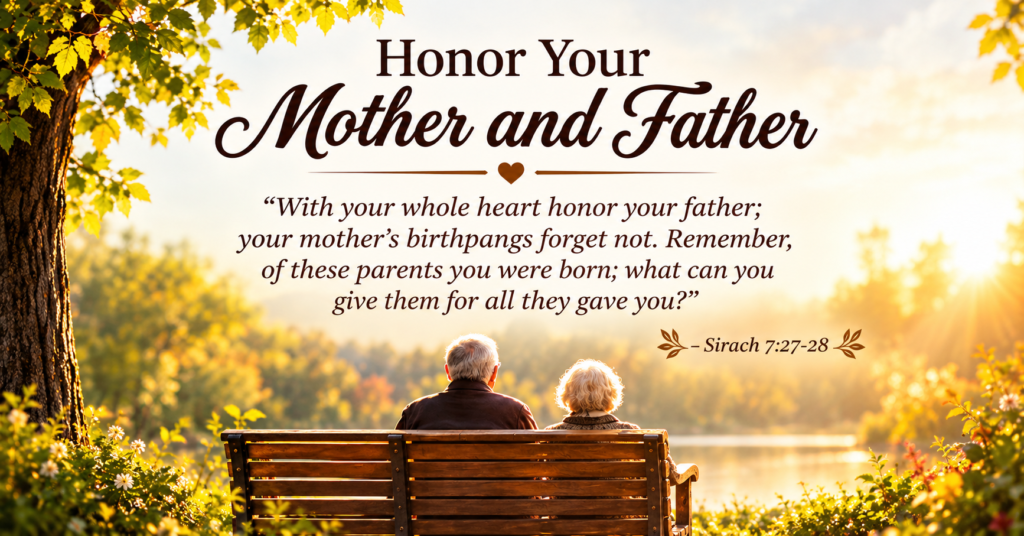
The most searched Bible verse about honoring mother and father is also one of the oldest commands in Scripture — and the only one of the Ten Commandments that comes with an explicit promise attached to it. God did not just tell His people to honor their parents. He connected that honor to something specific: long life and well-being. That detail is not decorative. It reveals how seriously God takes the parent-child relationship and how central it is to the way He designed human flourishing to work.
But living out the Bible verse about honoring mother and father is rarely as simple as the command makes it sound. What does honor look like when the relationship is complicated? When parents are aging and difficult? When the parent was absent or harmful? When adult children have their own lives and families to manage? Scripture addresses all of this — with more nuance and more grace than most people realize.
These 25 Bible verse about honoring mother and father selections — organized by theme, explained with depth, and applied to real life — will give you both the command and the wisdom to live it out.
Bible Verse About Honoring Mother and Father — The Command and Its Promise
The foundation of every Bible verse about honoring mother and father is the fifth commandment — the hinge between the commands about loving God and the commands about loving people. Understanding the command in its full context changes how you receive and apply it.
1. Exodus 20:12 (NIV)
“Honor your father and your mother, so that you may live long in the land the LORD your God is giving you.”
This is the original Bible verse about honoring mother and father — and it carries two significant elements. First, the command itself: honor. Not merely obey. Not just tolerate. Honor — a word that implies genuine esteem, not grudging compliance. Second, the promise: long life in the land God is giving. This is the only commandment of the ten that comes with an explicit reward, which signals that God takes the parent-child relationship seriously enough to attach tangible outcomes to it.
2. Deuteronomy 5:16 (NIV)
“Honor your father and your mother, as the LORD your God has commanded you, so that you may live long and that it may go well with you in the land the LORD your God is giving you.”
The Deuteronomy version of this Bible verse about honoring mother and father adds one phrase to the original: “that it may go well with you.” Long life is the first promise. General well-being is the second. God is saying that the person who honors their parents positions themselves inside a framework of flourishing that He designed. This is not a transaction — it is a covenantal principle about how human life works when it is aligned with God’s order.
3. Ephesians 6:1–3 (NIV)
“Children, obey your parents in the Lord, for this is right. ‘Honor your father and mother’ — which is the first commandment with a promise — ‘so that it may go well with you and that you may enjoy long life on the earth.'”
Paul’s commentary on this Bible verse about honoring mother and father is precise and theologically significant. He calls it the first commandment with a promise — not because other commandments carry no blessing, but because this one has the promise explicitly stated as part of the command itself. The New Testament reaffirms what the Old Testament established: honoring parents is not an ancient cultural convention. It is a timeless covenant principle that Paul applies directly to the first-century church.
4. Mark 7:9–13 (NIV)
“And he continued, ‘You have a fine way of setting aside the commands of God in order to observe your own traditions! For Moses said, “Honor your father and mother,” and, “Anyone who curses their father or mother is to be put to death.” But you say that if anyone declares that what might have been used to help their father or mother is Corban (that is, devoted to God) — then you no longer let them do anything for their father or mother. Thus you nullify the word of God by your tradition that you have handed down.'”
This is one of the most important Bible verse about honoring mother and father passages in the New Testament — because Jesus uses it to correct religious hypocrisy directly. The Pharisees had developed a loophole: by dedicating money to God (Corban), they could avoid using it to support aging parents. Jesus was furious. He called it nullifying God’s Word through tradition. This passage establishes clearly that honoring parents includes practical, material care — and that no religious excuse exempts a person from it.
Bible Verse About Honoring Mother and Father — Wisdom From Proverbs
The book of Proverbs contains more wisdom on the parent-child relationship than any other book in Scripture. These Bible verse about honoring mother and father selections from Proverbs speak to the daily, practical dimensions of what honor looks like in real family life.
5. Proverbs 1:8–9 (NIV)
“Listen, my son, to your father’s instruction and do not forsake your mother’s teaching. They are a garland to grace your head and a chain to adorn your neck.”
This Bible verse about honoring mother and father frames parental instruction as adornment — something that adds beauty and grace to the one who receives it. The child who throws away a parent’s teaching is discarding something more valuable than they realize. Listening — genuinely, attentively listening — to what parents have learned through their years is one of the most practical forms of honor a child can offer.
6. Proverbs 10:1 (NIV)
“A wise son brings joy to his father, but a foolish son brings grief to his mother.”
The choices you make with your life are a form of honor or dishonor to your parents. This Bible verse about honoring mother and father makes the connection explicit: your wisdom produces joy; your foolishness produces grief. Honor is not only about how you speak to your parents or how you treat them in person — it is about the kind of person you choose to become and the kind of life you choose to live.
7. Proverbs 23:22 (NIV)
“Listen to your father, who gave you life, and do not despise your mother when she is old.”
Two specific applications in one Bible verse about honoring mother and father: listen to your father and do not despise your aging mother. The tendency to dismiss older parents — to tune out their counsel, to become impatient with their pace, to treat their age as an inconvenience — is something Proverbs named and prohibited. The parent who is aging and slowing down is owed the same honor as the parent in their prime.
8. Proverbs 15:5 (NIV)
“A fool spurns a parent’s discipline, but whoever heeds correction shows prudence.”
Receiving correction from a parent — genuinely receiving it rather than resisting or resenting it — is described here as prudence. This Bible verse about honoring mother and father connects honor to receptivity. The child who can hear a parent’s correction without defensiveness is demonstrating a form of honor that goes deeper than outward compliance.
9. Proverbs 17:6 (NIV)
“Children’s children are a crown to the aged, and parents are the pride of their children.”
Honor flows in both directions. This Bible verse about honoring mother and father establishes that parents are the pride of their children — which means the parent-child relationship is designed to be one of mutual glory, not one-sided obligation. The child who genuinely honors their parents is reflecting back a glory that flows from the relationship itself.
10. Proverbs 28:24 (NIV)
“Whoever robs their father or mother and says, ‘It’s not wrong,’ is partner to one who destroys.”
Taking advantage of parents — financially, emotionally, or otherwise — while rationalizing it is treated as a serious moral failure in this Bible verse about honoring mother and father. The person who exploits parental love while telling themselves it is acceptable is described as a partner to destruction. Honor includes protecting parents from exploitation, including from yourself.
Bible Verse About Honoring Mother and Father — Practical Care in Old Age
The New Testament is particularly direct about what honoring aging parents looks like in practice. These Bible verse about honoring mother and father passages address the specific obligation of adult children toward parents who need care.
11. 1 Timothy 5:4 (NIV)
“But if a widow has children or grandchildren, these should learn first of all to put their religion into practice by caring for their own family and so repaying their parents and grandparents, for this is pleasing to God.”
Paul calls caring for aging parents a repayment — an acknowledgment of what was given in childhood. This Bible verse about honoring mother and father makes the obligation concrete and financial: caring for your family is putting your religion into practice. It is not optional charity. It is the expected expression of faith in the home.
12. 1 Timothy 5:8 (NIV)
“Anyone who does not provide for their relatives, and especially for their own household, has denied the faith and is worse than an unbeliever.”
This is the strongest language in the New Testament on the obligation to care for family. Paul calls neglecting aging relatives a denial of faith — a theological failure, not just a relational one. This Bible verse about honoring mother and father establishes that the care of aging parents is inseparable from genuine Christian belief. What you confess on Sunday must be visible in how you treat your parents on every other day.
13. John 19:26–27 (NIV)
“When Jesus saw his mother there, and the disciple whom he loved standing nearby, he said to her, ‘Woman, here is your son,’ and to the disciple, ‘Here is your mother.’ From that time on, this disciple took her into his own home.”
In the final hours of His life — while dying on the cross — Jesus arranged care for His mother. This is perhaps the most powerful Bible verse about honoring mother and father in the entire New Testament because of its context. The commandment He had kept His entire life, He practiced in His most extreme moment of suffering. He did not forget His mother while He was saving the world.
14. Ruth 1:16–17 (NIV)
“But Ruth replied, ‘Don’t urge me to leave you or to turn back from you. Where you go I will go, and where you stay I will stay. Your people will be my people and your God my God.'”
Ruth was a daughter-in-law, not a biological child — yet her loyalty to Naomi is one of Scripture’s most powerful models of what honoring a parental figure looks like. This Bible verse about honoring mother and father expands the principle beyond biological obligation. The person who filled a parental role in your life — a stepparent, a grandparent, a guardian, a mentor — is deserving of the same honor the commandment describes.
Bible Verse About Honoring Mother and Father — When the Relationship Is Complicated
Not every parent-child relationship is simple. Scripture does not pretend otherwise. These Bible verse about honoring mother and father passages speak to the people who find the fifth commandment genuinely difficult — not because they are unwilling to obey, but because their situation is genuinely complex.
15. Ephesians 6:4 (NIV)
“Fathers, do not exasperate your children; instead, bring them up in the training and instruction of the Lord.”
This is the only Bible verse about honoring mother and father that addresses the parent’s obligation. Paul’s command to fathers not to exasperate their children acknowledges that parental authority can be exercised badly — and that it should not be. This verse holds parents accountable for creating the relational conditions that make honoring them possible.
16. Romans 12:18 (NIV)
“If it is possible, as far as it depends on you, live at peace with everyone.”
The qualifier “as far as it depends on you” is theologically significant in the context of this Bible verse about honoring mother and father. It acknowledges that peace is not always achievable unilaterally. You can honor a parent while maintaining appropriate distance from ongoing harm. You can love the person while protecting yourself from their behavior. Honor does not require the absence of limits — it requires doing what genuinely depends on you.
17. Acts 5:29 (NIV)
“Peter and the other apostles replied: ‘We must obey God rather than human beings!'”
Ephesians 6:1 says obey your parents “in the Lord” — and that qualifier has a boundary built into it. This Bible verse about honoring mother and father context establishes what that boundary is: when a parent’s instruction requires disobeying God, God’s authority takes precedence. Honor does not require complying with sin. The commandment to honor parents operates within the larger framework of devotion to God.
18. 1 Peter 4:8 (NIV)
“Above all, love each other deeply, because love covers over a multitude of sins.”
Love that covers a multitude of sins is love that can honor imperfect people — which is all parents. This Bible verse about honoring mother and father does not require that parents be perfect before they can be honored. It requires a love that is generous enough to extend beyond the failures, the wounds, and the disappointments that every parent-child relationship inevitably contains.
Bible Verse About Honoring Mother and Father — Blessings and Prayers for Parents
Honoring your parents includes praying for them, blessing them, and speaking well of them. These Bible verse about honoring mother and father passages support the practice of active, ongoing honor through prayer and blessing.
19. Numbers 6:24–26 (NIV)
“The LORD bless you and keep you; the LORD make his face shine on you and be gracious to you; the LORD turn his face toward you and give you peace.”
Speaking this ancient priestly blessing over your parents — over their lives, their health, their remaining years — is one of the most beautiful expressions of the Bible verse about honoring mother and father principle. Honor includes bringing your parents before God in prayer and declaring His blessings over them.
20. Psalm 71:9 (NIV)
“Do not cast me away when I am old; do not forsake me when my strength is gone.”
This psalm gives voice to what every aging parent fears — abandonment in weakness. This Bible verse about honoring mother and father should be read as a plea that God answers through the faithfulness of adult children. The child who stays present, who does not forsake when strength is gone, is living out the answer to this prayer.
21. Leviticus 19:32 (NIV)
“Stand up in the presence of the aged, show respect for the elderly and revere your God. I am the LORD.”
Honor for the elderly — including parents — is connected in this Bible verse about honoring mother and father directly to reverence for God. The two postures belong together: the person who genuinely fears God will naturally extend honor to those God has placed in positions of parental authority and experience.
22. Proverbs 16:31 (NIV)
“Gray hair is a crown of glory; it is gained in a righteous life.”
The aging parent carries accumulated wisdom that cannot be purchased or rushed. This Bible verse about honoring mother and father calls gray hair a crown of glory — which means the older, slower, less impressive parent is deserving of the reverence that a crown implies. Honor sees the crown, not just the age.
Honoring Mother: Special Bible Verses for Your Mom
These Bible verse about honoring mother and father selections speak specifically to the mother’s role — the one Proverbs celebrates, the one Jesus honored from the cross, the one Scripture consistently holds up as deserving specific recognition.
23. Proverbs 31:28–29 (NIV)
“Her children arise and call her blessed; her husband also, and he praises her: ‘Many women do noble things, but you surpass them all.'”
The children who call their mother blessed are practicing one of the purest forms of the Bible verse about honoring mother and father command. Speaking well of your mother — to her, about her, and in her presence — is an act of honor that Scripture specifically commends in this famous passage.
24. Luke 2:51 (NIV)
“Then he went down to Nazareth with them and was obedient to them. But his mother treasured all these things in her heart.”
Jesus — fully God — was obedient to His earthly parents in Nazareth. This Bible verse about honoring mother and father shows that the Son of God modeled the very commandment He had given. If Jesus submitted to Mary and Joseph, the case for honoring parents cannot be weakened by any argument about personal autonomy or spiritual advancement.
25. Psalm 139:13–14 (NIV)
“For you created my inmost being; you knit me together in my mother’s womb. I praise you because I am fearfully and wonderfully made.”
The mother’s womb was where God’s creative work began in your life. This Bible verse about honoring mother and father grounds the honor of motherhood in the theology of creation: your mother was the vessel through which God knit you together. The honor you extend to her is, in part, a recognition of what God did through her before you ever drew breath.
What Bible Verse About Honoring Mother and Father Looks Like in Real Life
The Bible verse about honoring mother and father becomes most meaningful when it moves from the page into the actual moments of family life. Here is what it looks like practically in every season.
In childhood: Obedience to parental instruction is the most direct expression of the Bible verse about honoring mother and father for children. Proverbs 1:8–9 says parental teaching is a garland — something precious to wear, not to discard.
In young adulthood: Honor shifts from obedience to respect — listening before dismissing, considering parental wisdom even when you make your own decisions, and speaking of your parents with dignity to others.
In midlife: The Bible verse about honoring mother and father becomes most practically demanding when parents begin to need care. First Timothy 5:4 calls this care a repayment — a return of what was given. Jesus modeled this from the cross.
In difficult relationships: Romans 12:18 gives permission to do what genuinely depends on you — and no more. Honor does not require pretending harm did not happen. It requires doing what you actually can do with integrity and without self-destruction.
Through prayer: Praying for your parents — regularly, specifically, and faithfully — is one of the most sustained forms of the Bible verse about honoring mother and father command available to adult children regardless of their relational proximity.
Frequently Asked Questions About Bible Verse About Honoring Mother and Father
What is the main Bible verse about honoring mother and father?
Exodus 20:12 — “Honor your father and your mother, so that you may live long in the land the LORD your God is giving you” — is the original and most foundational Bible verse about honoring mother and father. It is the fifth of the Ten Commandments and the only one with an explicit promise of long life and well-being attached to it. Paul quotes it in Ephesians 6:1–3, calling it the first commandment with a promise and reaffirming its application for New Testament believers.
What does it mean to honor your father and mother according to the Bible?
The Bible verse about honoring mother and father covers several dimensions: listening to parental instruction (Proverbs 1:8–9), not speaking contemptuously (Proverbs 23:22), providing practical care in old age (1 Timothy 5:4–8), speaking well of them (Proverbs 31:28), and maintaining the relationship as far as it genuinely depends on you (Romans 12:18). Honor is broader than obedience — it includes esteem, care, and the dignity you extend to the person regardless of whether you agree with every decision they have made.
Does the Bible verse about honoring mother and father apply to adult children?
Yes. While Paul’s specific instruction to “obey” in Ephesians 6:1 is addressed to children, the broader command to honor — which appears in Exodus 20:12 — has no age limit. Jesus quoted it in Matthew 19:19 and Mark 7:9–13 in contexts that applied to adults. Paul in 1 Timothy 5:4–8 applied the obligation of honoring aging parents specifically to adult children who were capable of providing financial and practical care. The form of honor changes with age, but the command does not expire.
How do you honor a parent who was abusive or absent?
Romans 12:18 is essential here: “If it is possible, as far as it depends on you, live at peace with everyone.” The qualifier “as far as it depends on you” acknowledges that relational peace is not always achievable and that your obligation extends to what genuinely depends on you — not to what requires removing all protective limits. You can honor the role of parent while maintaining appropriate distance from ongoing harm. Forgiveness is always required (Ephesians 4:32); full access to someone who continues to harm is not.
What did Jesus say about honoring your parents?
Jesus quoted the Bible verse about honoring mother and father multiple times. In Matthew 19:19, He listed it among the commandments essential to right living. In Mark 7:9–13, He sharply rebuked the Pharisees for using religious tradition to avoid practically supporting aging parents. He called their behavior a nullification of God’s Word. And on the cross, He arranged care for His mother — demonstrating in His final hours the command He had kept His entire life.
Is it a sin to disrespect your parents?
Yes. The Old Testament treated it with severe consequences — Exodus 21:17 prescribed death for cursing parents. Jesus quoted this severity in Mark 7:10 not to reinstate capital punishment but to establish the weight of the obligation. Proverbs repeatedly addresses the shame that comes from dishonoring parents. The Bible verse about honoring mother and father is framed as a serious moral obligation throughout Scripture, and its violation is treated as a genuine sin — not a minor failing.
What Bible verse about honoring mother and father is best for Mother’s Day or Father’s Day?
Proverbs 31:28–29 is one of the most meaningful Bible verse about honoring mother and father options for Mother’s Day: “Her children arise and call her blessed.” For Father’s Day, Proverbs 23:22 — “Listen to your father, who gave you life” — carries particular weight. Ephesians 6:1–3 works beautifully for both, as it quotes the fifth commandment with its promise and applies it directly to the relationship of children to both parents.
How does the Bible verse about honoring mother and father apply when parents have died?
The honor owed to parents does not end at their death. Speaking well of them to your children, preserving their legacy, continuing to embody the values they instilled, and honoring their memory through how you live are all forms of the Bible verse about honoring mother and father that extend beyond death. Proverbs 17:6 says parents are the pride of their children — and that pride can continue to be expressed long after the parent is no longer living.
Final Thought: The Command With a Promise Still Stands
Every Bible verse about honoring mother and father in this collection points toward the same truth: God takes the parent-child relationship seriously enough to attach specific promises to it, to have Jesus model it from the cross, and to have Paul reinforce it in churches across the first-century Roman world.
Honor is not the same as agreement. It is not the same as blind obedience. It is not the same as pretending relationships are better than they are. It is a posture of genuine esteem, practical care, and the kind of love that covers a multitude of sins — in both directions.
Begin with the command. Find the form of honor that fits your relationship and your season. Trust that the God who attached a promise of long life and well-being to this command is still watching — and that honoring the parents He placed in your life is one of the most significant things you can do with yours.
To read Ephesians 6:1–4 — the New Testament’s most complete passage on the parent-child relationship — in its full context, visit Ephesians 6:1–4 on Bible Gateway.
LOOKING FOR SOME MORE ENGAGING CONTENT:
Don’t Let Others Steal Your Joy: 7 Powerful Bible Truths to Protect Your Peace