Bible Verses About Mountains: 15 Powerful Lessons for 2026
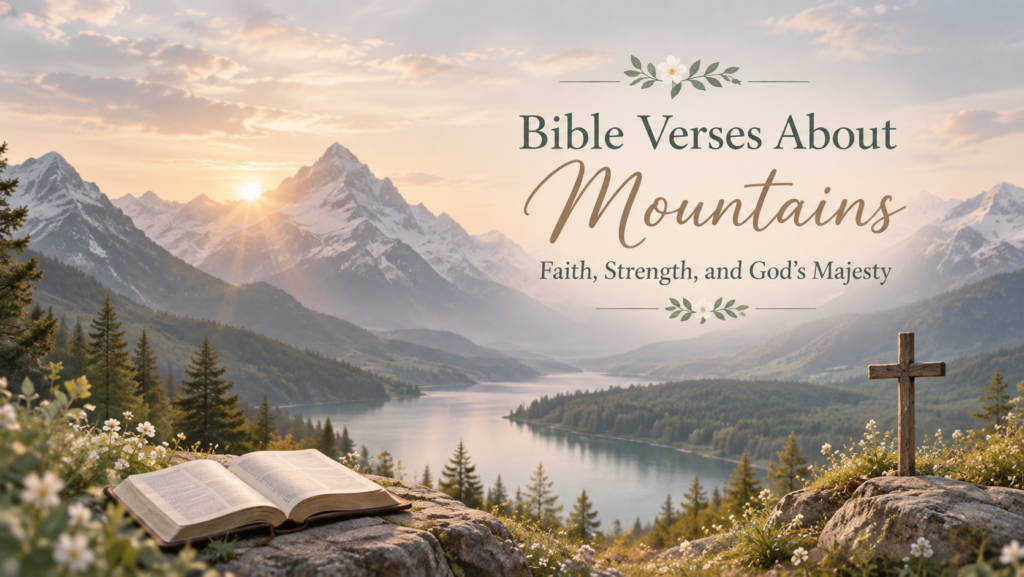
Mountains are among Scripture’s strongest images. They can be places of worship, prayer, revelation, testing, refuge, and transformation. Bible Verses About Mountains also speak to something deeply personal: the obstacles that look too large to overcome and the God who is greater than them.
If you are looking for mountain Scriptures for encouragement, prayer, or a difficult season, these 15 passages offer practical lessons about faith, courage, God’s presence, perseverance, and hope.
15 Bible Verses About Mountains and Their Lessons
1. Psalm 121:1–2 — Look Beyond the Mountain to God
Psalm 121 begins with the psalmist looking toward the hills and asking where help will come from. The answer is the Lord, the Maker of heaven and earth.
The lesson is simple: the mountain may represent your problem, but it does not have to become your source of fear. Look beyond the obstacle to the One who made it.
For the full passage and translation options, you can read Psalm 121:1–2 on Bible Gateway.
2. Matthew 17:20 — Faith Can Face Impossible Obstacles
Jesus uses a mountain as an image of something that appears impossible. He teaches that even faith as small as a mustard seed matters when it is genuine and directed toward God.
This is not a promise that every desired outcome will happen exactly as we imagine. It is a call to trust God when circumstances look immovable.
3. Isaiah 54:10 — God’s Love Is More Secure Than Mountains
Isaiah uses mountains and hills to describe things that seem permanent. Even if they move, God’s covenant love remains.
That makes this passage deeply comforting when life feels unstable. Plans change, relationships change, and circumstances shift, but God’s faithfulness is not measured by the stability of your surroundings.
4. Psalm 90:2 — God Is Older Than the Mountains
Psalm 90 places God before the mountains and the world itself. Mountains may look ancient to us, but they are not eternal.
This gives us perspective during anxious seasons. Your current struggle has a beginning and an end. God is not trapped inside your timeline, and your present situation does not define the whole story.
5. Psalm 95:4–5 — The Mountains Belong to God
Psalm 95 points to the depths of the earth, mountain peaks, sea, and dry land as belonging to God because He made them.
When a mountain makes you feel small, let that feeling become worship rather than fear. The One who formed what looks enormous to us is not overwhelmed by anything in our lives.
6. Psalm 125:1–2 — God Surrounds Those Who Trust Him
Psalm 125 compares those who trust the Lord with Mount Zion and then pictures God surrounding His people as mountains surround Jerusalem.
Faith does not mean believers never face danger or uncertainty. It means they can face those things knowing they are not abandoned.
7. Isaiah 40:4 — God Can Make a Way Through Rough Places
Isaiah describes valleys being raised, mountains and hills being brought low, and rough ground becoming level.
In context, this imagery belongs to a larger message about preparing the way for God. For readers today, it can remind us that difficult terrain is not beyond God’s ability to transform.
8. 1 Kings 19:11–12 — God Is Not Always Found in the Noise
Elijah stood on a mountain while wind, an earthquake, and fire passed by. Yet the passage emphasizes a gentle voice afterward.
The lesson is easy to miss: God’s work is not always dramatic. Sometimes faith grows when we become quiet enough to recognize His gentle direction.
9. Matthew 17:1–2 — Mountains Can Become Places of Revelation
Jesus took Peter, James, and John up a high mountain, where they witnessed His transfiguration.
The important point is not the scenery. The disciples were being shown more clearly who Jesus is. This passage reminds us that significant spiritual insight can change how we see Christ and our own circumstances.
10. Micah 4:1 — The Mountain of the Lord Points to Hope
Micah describes the mountain of the Lord’s temple as established above the hills, with peoples streaming toward it.
The passage presents a future vision connected with God’s reign, instruction, and hope. Mountain imagery here points beyond present circumstances toward God’s larger purposes.
11. Psalm 46:2 — Do Not Let Shaking Foundations Destroy Your Faith
Psalm 46 uses dramatic mountain imagery to describe a world that feels completely unstable.
The message is not that believers will never experience frightening change. Instead, it teaches confidence in God when the world around us feels uncertain.
This makes the passage especially meaningful during seasons of loss, fear, or major change.
12. Isaiah 52:7 — Mountains Can Carry Good News
Isaiah pictures a messenger bringing good news across the mountains.
The difficult landscape becomes the setting for a message of peace and salvation. That image still speaks today: a prayer, encouraging message, Scripture, or testimony may reach someone who is walking through a difficult valley.
13. Zechariah 4:7 — God Can Overcome the Mountain Before You
Zechariah asks what a great mountain is before Zerubbabel and describes it becoming level ground.
The surrounding context connects this with God’s work and the rebuilding of the temple. The lesson is not that faith gets everything we want; it is that God can accomplish His purposes despite overwhelming opposition.
14. Exodus 19:18 — Sinai Shows the Holiness of God
At Mount Sinai, Scripture describes smoke and trembling as God’s presence is revealed and Moses approaches the mountain.
Sinai teaches reverence. Mountains in Scripture are not always peaceful symbols. Sometimes they remind us that God is holy and that approaching Him should produce humility, awe, and obedience.
15. Psalm 24:3–4 — Climbing God’s Holy Mountain
Psalm 24 asks who may ascend the mountain of the Lord and points to clean hands and a pure heart.
The lesson is about character rather than physical achievement. The image of climbing upward can remind us that a life close to God involves integrity, sincerity, and a heart turned toward Him.
What Do Mountains Symbolize in the Bible?
Mountains do not have one single meaning in Scripture. Their meaning depends on the passage.
They can represent:
- God’s power and creation
- Worship and sacred encounters
- Revelation and instruction
- Testing and obedience
- Refuge and security
- Obstacles that require faith
- Spiritual transformation
- Hope and God’s future reign
That variety is what makes Bible Verses About Mountains so meaningful. A mountain can be a place where someone meets God, a picture of a problem, or a reminder of His authority.
What Is the Most Powerful Mountain Verse in the Bible?
There is no single best verse for every situation.
Psalm 121:1–2 is especially comforting because it directs our attention from the hills to God as the source of help. Matthew 17:20 speaks strongly to impossible challenges, while Isaiah 54:10 emphasizes God’s unfailing love.
Choose the passage that matches what you are facing rather than simply choosing the most famous verse.
What Can Mountains Teach Us About Faith?
Mountains teach us that faith is not pretending difficulty does not exist. Biblical faith can admit that an obstacle is large while still trusting that God is greater.
They also teach perspective. Psalm 90 points beyond the age of mountains to God’s eternity, while Psalm 125 uses surrounding mountains to picture His protection.
Together, these passages move the reader from fear toward trust.
How to Use These Mountain Scriptures in Prayer
You do not need to read all 15 passages at once. Choose the one that fits your season.
- Facing an impossible situation: Pray through Matthew 17:20.
- Feeling overwhelmed: Begin with Psalm 121:1–2.
- Afraid of change: Reflect on Isaiah 54:10.
- Needing reassurance: Read Psalm 125:1–2.
- Needing quiet: Spend time with 1 Kings 19:11–12.
A simple prayer is:
Lord, You are greater than the mountain in front of me. Give me wisdom for the next step, courage to keep going, and trust to leave the outcome in Your hands.
When to Share These Bible Verses About Mountains
These Scriptures work well for:
- Morning devotionals
- Christian encouragement posts
- Prayer messages
- Bible study notes
- Church small groups
- Scripture graphics
- Messages for someone facing a difficult season
- Personal journaling
A short verse becomes even more meaningful when you add one personal sentence explaining why you are sharing it.
Famous Mountains in the Bible
Several mountains are connected with major biblical events. Mount Sinai is associated with Moses and the giving of the Law. Mount Moriah is connected with Abraham’s testing involving Isaac. Mount Zion becomes an important biblical symbol connected with Jerusalem. The Mount of Olives is prominent in the ministry and final days of Jesus.
These locations show that mountains are woven into the larger biblical story rather than serving only as scenery.
Frequently Asked Questions
What Bible verse says faith can move mountains?
Matthew 17:20 is the best-known passage. Jesus uses a mountain as an image of an apparently impossible obstacle and teaches His disciples about faith.
What do mountains symbolize in the Bible?
They can symbolize God’s power, worship, revelation, stability, testing, obstacles, refuge, and hope. The meaning depends on the context.
What is a good Bible verse for overcoming obstacles?
Matthew 17:20 is a strong choice when an obstacle feels impossible. Zechariah 4:7 is also meaningful when you need encouragement to trust God’s ability to overcome opposition.
What Psalm talks about mountains?
Psalm 121:1–2 looks toward the hills while directing the reader to God as the true source of help. Psalm 90:2, Psalm 95:4–5, and Psalm 125:1–2 also use mountain imagery.
What does Psalm 121 say about mountains?
It begins by looking toward the mountains and asking where help comes from. The answer is the Lord, the Maker of heaven and earth.
Why are mountains important in the Bible?
Mountains often serve as settings for worship, revelation, testing, prayer, and major moments in God’s story. They also provide powerful imagery for strength and obstacles.
Can I use these verses in a prayer?
Yes. Read the passage slowly, identify its main truth, and turn that truth into a personal prayer. Psalm 121, for example, can become a prayer for guidance and protection.
Which mountain verse is best for encouragement?
Psalm 125:1–2 is especially encouraging when you need a reminder of God’s protection. Isaiah 54:10 is helpful when you fear that circumstances are changing.
Final Encouragement
The mountains in Scripture are beautiful, but the Bible’s message is not ultimately about mountains. It is about God.
Sometimes you need to look up and remember where your help comes from. Sometimes you need faith to face a mountain that seems impossible. Sometimes you need to become quiet and listen. And sometimes you simply need the reminder that even things that look permanent are not more permanent than God’s faithfulness.
Let these Bible Verses About Mountains meet you wherever you are today. You may not know how the mountain in front of you will change, but you can take your next step with faith, prayer, courage, and hope.
LOOKING FOR SOME MORE ENGAGING CONTENT: