Manipulation in the Bible: 7 Powerful Truths for Freedom
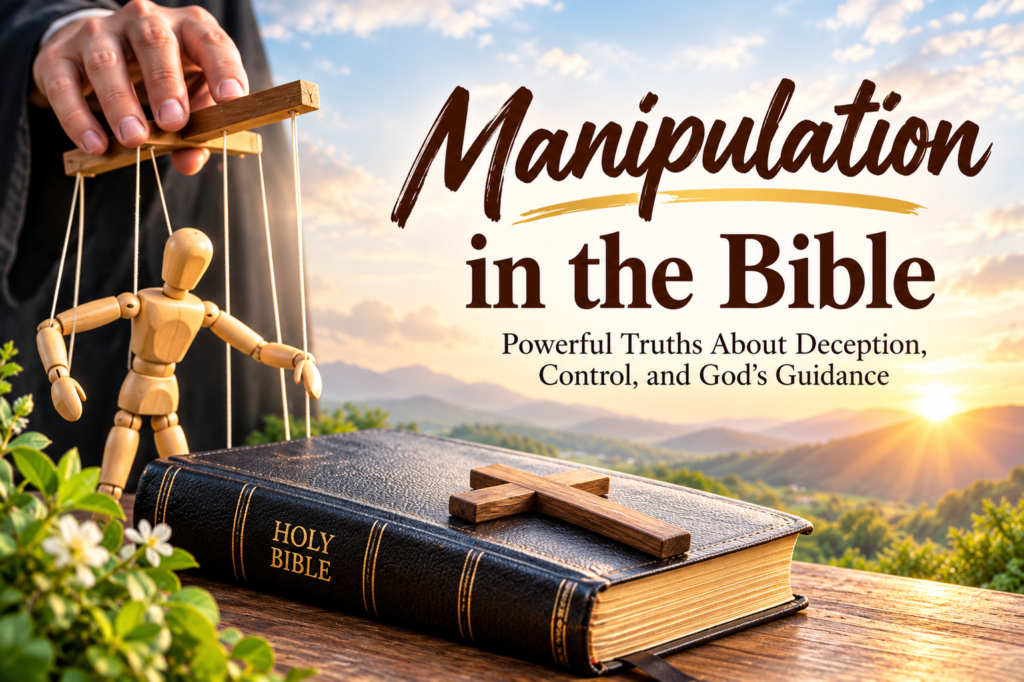
Manipulation in the Bible is revealed through repeated warnings about deception, dishonest speech, selfish control, false teaching, and the misuse of influence. Although Scripture does not commonly use the modern term “manipulation,” it clearly addresses behaviors that pressure, deceive, exploit, intimidate, or control others.
Understanding manipulation in the Bible can help Christians recognize unhealthy influence, protect their peace, develop spiritual discernment, and make wise decisions according to God’s Word.
The Bible also teaches believers how to respond. Christians are called to walk in truth, practice wisdom, speak with love, establish healthy boundaries, and stand firm in the freedom found in Christ.
Manipulation can happen in families, friendships, marriages, workplaces, and religious communities. Sometimes it appears as kindness or concern. Other times it uses guilt, fear, flattery, threats, secrecy, or spiritual language to influence someone’s decisions.
This guide explores seven powerful biblical truths about manipulation, examples of deceptive behavior in Scripture, warning signs to recognize, and practical ways Christians can respond with wisdom and grace.
What Does the Bible Say About Manipulation?
The Bible consistently warns against deception, dishonesty, selfish ambition, false teaching, and the abuse of authority. These biblical warnings provide a useful framework for understanding manipulation.
Manipulation can involve twisting facts, hiding important information, using guilt to control someone, creating unnecessary fear, misusing authority, or using flattering words to achieve a selfish goal.
Romans 16:18 warns about people who use smooth speech and flattery to deceive others. This is important because manipulation does not always look aggressive. Someone can sound kind, religious, confident, or helpful while secretly attempting to control another person’s choices.
Ephesians 4:14 also warns believers about deceptive schemes and encourages spiritual maturity. Christians are therefore encouraged to grow in biblical knowledge rather than becoming dependent on persuasive personalities.
The central biblical principle is simple:
God calls His people to truth, love, wisdom, humility, and freedom—not deception, fear, or controlling behavior.
7 Powerful Biblical Truths About Manipulation
1. Manipulation Often Uses Deception and Flattery
Romans 16:17–18 warns believers about people who create division and use smooth talk and flattering words to deceive others.
This teaches an important lesson: manipulation is not always obvious. A manipulative person may use compliments, emotional closeness, religious language, or persuasive communication to gain someone’s trust.
The problem is not kindness itself. Genuine kindness seeks another person’s good. Manipulation uses kindness, praise, or charm as a tool for personal advantage.
Biblical lesson: Do not evaluate influence by words alone. Pay attention to motives, actions, consistency, and the long-term results of someone’s behavior.
2. Spiritual Maturity Helps Protect You From Deception
Ephesians 4:14 describes believers who can be vulnerable to deceptive teaching because they have not yet developed spiritual maturity.
This principle applies to manipulation as well. Someone who knows very little about Scripture may be more vulnerable to a confident person who claims to speak with unquestionable spiritual authority.
Healthy Christian discernment involves learning Scripture, asking questions, considering context, and seeking wise counsel.
A mature believer does not automatically accept every religious claim simply because someone presents it confidently.
Biblical lesson: Grow in your understanding of God’s Word so that another person’s confidence cannot replace your own discernment.
3. God Values Truth Over Dishonesty
Proverbs 12:22 teaches that lying lips are detestable to the Lord, while trustworthy people please Him.
Manipulation frequently depends on some form of dishonesty. A person may hide important facts, change a story, make promises they do not intend to keep, or present false motives to influence someone.
Truthful communication does not guarantee that every relationship will be easy. However, honesty creates the foundation for trust and accountability.
Christians should therefore resist the temptation to manipulate others even when they believe they have a good reason for doing so.
Biblical lesson: A godly goal does not justify deceptive methods. Truthfulness should guide both what we say and how we influence others.
4. Pleasant Words Do Not Always Reveal a Person’s Motives
Proverbs 26:24–26 warns that a person may hide harmful intentions behind pleasant speech.
This is especially relevant when someone appears charming while repeatedly behaving in controlling or dishonest ways.
Manipulation can involve excessive compliments, exaggerated kindness, emotional closeness, or carefully chosen words designed to make another person feel indebted.
This does not mean Christians should become suspicious of everyone who is friendly. Instead, Scripture encourages wisdom. Look for consistency between what a person says and how that person behaves over time.
Biblical lesson: Character is revealed through consistent actions, not simply attractive words.
5. Test Spiritual Claims Instead of Accepting Them Blindly
1 John 4:1 tells believers to test spiritual claims rather than believing every spirit.
This principle is particularly important when manipulation involves religion. A person may say, “God told me that you must do this,” and use that statement to pressure someone into obedience.
Spiritual language does not automatically make a demand biblical.
Christians can respectfully examine teaching against Scripture, consider the context of biblical passages, seek wise counsel, and take time to pray before making significant decisions.
No individual should use religious authority to eliminate another person’s ability to think, ask questions, or seek appropriate counsel.
Biblical lesson: Test spiritual claims carefully. Scripture should guide your conscience rather than another person’s personal demands.
6. Abuse of Authority Can Become a Form of Manipulation
In Matthew 20:25–28, Jesus contrasts worldly leadership with the servant leadership expected from His followers.
Worldly rulers may “lord it over” others, but Jesus teaches His disciples that greatness should be expressed through service.
This principle challenges controlling leadership in families, churches, workplaces, and other communities.
Authority should never become an excuse for intimidation, exploitation, humiliation, or domination. Christian leadership should demonstrate humility, accountability, responsibility, and service.
Religious position alone does not make someone trustworthy. Character and conduct matter.
Biblical lesson: Godly influence serves people rather than using people for personal power.
7. Christ Calls Believers to Freedom
Galatians 5:1 teaches believers to stand firm in the freedom Christ provides.
Manipulative relationships can produce fear, confusion, unhealthy dependence, and a feeling that someone else controls every decision.
Christian freedom does not mean ignoring responsibility or refusing wise guidance. It means that believers do not have to surrender their conscience to another person’s manipulation.
A healthy relationship can include advice, correction, leadership, and accountability while still respecting personal responsibility.
Biblical lesson: Christian faith should encourage truth, maturity, responsibility, and freedom rather than fear-based dependence.
Examples of Manipulation in the Bible
Several biblical stories illustrate behaviors that resemble what we today describe as manipulation.
The Serpent and Eve
In Genesis 3, the serpent questioned God’s command and presented disobedience as something desirable. The conversation introduced doubt about what God had said and whether His command was truly good.
The story demonstrates several deceptive techniques:
- Questioning established truth
- Creating doubt
- Distorting God’s command
- Presenting disobedience as beneficial
- Encouraging distrust
Biblical lesson: Deception can begin by making truth appear unreasonable, unnecessary, or restrictive.
Delilah and Samson
In Judges 16, Delilah repeatedly pressured Samson to reveal the secret of his strength.
The story demonstrates how emotional pressure can occur inside a close relationship. Repeated questioning, emotional reactions, disappointment, or appeals to affection can sometimes be used to obtain something a person is not freely willing to give.
Biblical lesson: Trust and affection should never be deliberately exploited for personal gain.
Jezebel and Naboth’s Vineyard
In 1 Kings 21, Jezebel arranged a false accusation against Naboth so that Ahab could obtain his vineyard.
This account involves several serious forms of wrongdoing:
- Abuse of authority
- Deception
- False accusations
- Greed
- Injustice
Biblical lesson: Manipulative behavior becomes especially dangerous when power is used to exploit or harm someone who has less influence.
False Teachers
The New Testament repeatedly warns believers about false teachers and people who use religious influence for selfish purposes.
Their teachings may sound convincing, but Christians are encouraged to evaluate religious claims according to Scripture rather than simply trusting a title, position, or impressive personality.
Biblical lesson: Religious authority should always be accompanied by truth, integrity, accountability, and faithful teaching.
Signs of Manipulation in Relationships
Not every disagreement is manipulation. People can misunderstand each other, communicate poorly, become emotional, or simply have different opinions.
The concern becomes greater when unhealthy behaviors form a repeated pattern.
Some warning signs include:
Guilt-Tripping
A person repeatedly makes you feel guilty whenever you say no.
Examples may include:
- “After everything I have done for you…”
- “If you really loved me, you would do this.”
- “A good Christian would never refuse.”
Fear and Threats
Someone uses fear to force a decision. They may threaten rejection, punishment, humiliation, financial consequences, or spiritual consequences.
Misusing Bible Verses
A person may quote Scripture selectively to demand obedience while ignoring biblical teachings about love, humility, justice, truth, and accountability.
Excessive Flattery
Flattery can sometimes be used to make someone feel special or indebted before asking for money, loyalty, secrecy, or obedience.
Isolation
A manipulative person may discourage you from speaking with trusted family members, friends, pastors, counselors, or other appropriate advisers.
Refusing Responsibility
Someone who consistently blames everyone else, refuses accountability, or never acknowledges wrongdoing may be displaying an unhealthy pattern.
Confusion and Pressure
You may be pressured to make an immediate decision without enough time to pray, think, ask questions, or seek wise counsel.
One warning sign alone does not prove someone’s motives. Look at repeated patterns, context, and behavior over time.
How Should Christians Respond to Manipulation?
When dealing with unhealthy influence, Christians can respond with truth, wisdom, prayer, and appropriate boundaries rather than revenge or manipulation.
1. Stay Connected to Truth
Study Scripture in context rather than depending entirely on another person’s interpretation.
When researching biblical themes, resources such as Bible Hub can provide additional study material. However, readers should always examine the full biblical passage and its context.
2. Pray for Wisdom
James 1:5 teaches that those who lack wisdom should ask God.
Prayer can help you seek clarity, courage, patience, and wisdom when a situation feels confusing.
You can pray for the ability to recognize truth, respond calmly, and make decisions without being controlled by fear.
3. Set Healthy Boundaries
A healthy boundary is not an act of hatred. It is a clear limit that can protect your responsibilities, safety, time, resources, and conscience.
You can say:
- “I need time to think and pray before deciding.”
- “I am not comfortable with that request.”
- “Please do not use Scripture to pressure me.”
- “I want to discuss this with a trusted adviser.”
- “I cannot continue this conversation while being threatened.”
Boundaries should be communicated honestly rather than used as another way to control someone.
4. Seek Mature Counsel
When a situation is complicated, speak with a trustworthy pastor, counselor, mentor, or mature Christian who is not under the controlling person’s influence.
Good counsel should encourage truth, wisdom, accountability, and safety rather than secrecy or blind loyalty.
5. Do Not Fight Manipulation With Manipulation
It can be tempting to respond to control by trying to control the other person.
However, Christians are called to act with integrity.
You can be firm without being cruel. You can forgive someone without trusting them immediately. You can show compassion while maintaining appropriate boundaries.
Responding wisely does not require becoming like the person who has hurt you.
6. Take Abuse Seriously
If manipulation involves threats, stalking, violence, financial exploitation, coercion, or serious spiritual abuse, seek appropriate professional, legal, pastoral, or safety support.
Forgiveness does not require remaining in danger.
When immediate safety is at risk, prioritize getting to a safe place and contacting appropriate local support.
Biblical Truth vs. Manipulative Influence
| Biblical influence | Manipulative influence |
|---|---|
| Encourages wise choices | Demands unquestioning obedience |
| Uses truth | Twists or hides important facts |
| Respects conscience | Controls through fear |
| Serves others | Uses people for personal gain |
| Accepts accountability | Blames and intimidates |
| Encourages maturity | Creates unhealthy dependence |
| Demonstrates humility | Demands power and attention |
| Allows thoughtful decisions | Creates pressure and confusion |
Jesus’ leadership provides a powerful contrast. He called people to follow Him, yet His example was marked by truth, sacrifice, compassion, humility, and service.
Christian influence should therefore point people toward truth and maturity rather than making them dependent on one person’s control.
Why Biblical Discernment Matters
Discernment helps believers distinguish between genuine guidance and unhealthy influence.
Hebrews 5:14 connects spiritual maturity with the ability to distinguish between good and evil through practice. Discernment is therefore not about becoming suspicious of everyone. It is about learning how to evaluate claims and behavior wisely.
When you are unsure about someone’s influence, consider these questions:
- Is this teaching consistent with Scripture?
- Is the person’s behavior honest?
- Are they respecting my conscience?
- Can I ask questions without being punished?
- Are they accountable to other trustworthy people?
- Does their influence encourage love and truth?
- Am I being pressured through fear or guilt?
- Am I being given reasonable time to think and pray?
Healthy Christian relationships can include correction and accountability while still allowing honest questions and personal responsibility.
Frequently Asked Questions
Is manipulation a sin according to the Bible?
Manipulation becomes sinful when it involves deception, dishonesty, selfish control, exploitation, intimidation, or abuse of authority. Scripture consistently calls believers toward truth, love, humility, justice, and integrity.
What does the Bible say about controlling people?
The Bible warns against dominating others. In Matthew 20:25–28, Jesus teaches that His followers should lead through service rather than exercising authority in a controlling way.
What Bible verse helps against manipulation?
Galatians 5:1 is helpful because it reminds believers to stand firm in the freedom Christ provides. Ephesians 4:14 and 1 John 4:1 also emphasize spiritual maturity and testing deceptive claims.
How do you deal with a manipulative person biblically?
Remain truthful, pray for wisdom, establish clear boundaries, seek trustworthy counsel, and avoid responding with revenge or manipulation. If the situation involves abuse or danger, seek appropriate professional and safety support.
Can a pastor or spiritual leader manipulate people?
Yes. Religious authority can be misused. Scripture warns about false teachers and leaders who use spiritual influence for selfish purposes. Christian leadership should be evaluated through Scripture, character, accountability, and servant-hearted conduct.
Is setting boundaries unchristian?
No. Wise boundaries can protect peace, safety, responsibility, and healthy relationships. A boundary can be communicated honestly and respectfully without being an act of hatred.
Should Christians forgive manipulative people?
Christians are called to forgive, but forgiveness does not mean ignoring harm or allowing continued abuse. Forgiveness and appropriate boundaries can exist together.
How can I recognize spiritual manipulation?
Look for fear-based commands, selective use of Bible verses, demands for secrecy, rejection of reasonable questions, excessive control, intimidation, and claims that one person alone speaks for God.
What is the difference between persuasion and manipulation?
Healthy persuasion allows a person to think and make a free decision. Manipulation relies on deception, fear, guilt, pressure, or hidden motives to control a person’s choice.
Can prayer help someone facing manipulation?
Yes. Prayer can provide wisdom, courage, peace, and strength. Prayer can also be combined with practical action, trusted counsel, healthy boundaries, and appropriate safety planning when necessary.
Final Thoughts
Manipulation in the Bible is best understood through Scripture’s repeated warnings against deception, dishonesty, selfish ambition, false teaching, and the misuse of authority.
God does not call His people to control others through fear, confusion, or deception. Instead, believers are called to walk in truth, practice wisdom, love others, and respect the dignity and responsibility of each person.
If you are dealing with manipulation, remember these biblical principles:
- You do not have to obey every demand.
- You are allowed to ask questions.
- You can take time before making important decisions.
- You can seek wise and trustworthy counsel.
- You can establish healthy boundaries.
- You can forgive without accepting continued abuse.
- You can stand firm in the freedom Christ provides.
- You can respond with truth instead of revenge.
The strongest response to manipulation is not manipulation in return. It is truth, wisdom, courage, prayer, healthy boundaries, and a life grounded in God’s Word.
Looking for more faith-based encouragement?
Read Saturday Blessing Quotes: 75 Uplifting Weekend Messages