For the Wages of Sin Is Death: 7 Powerful Biblical Truths
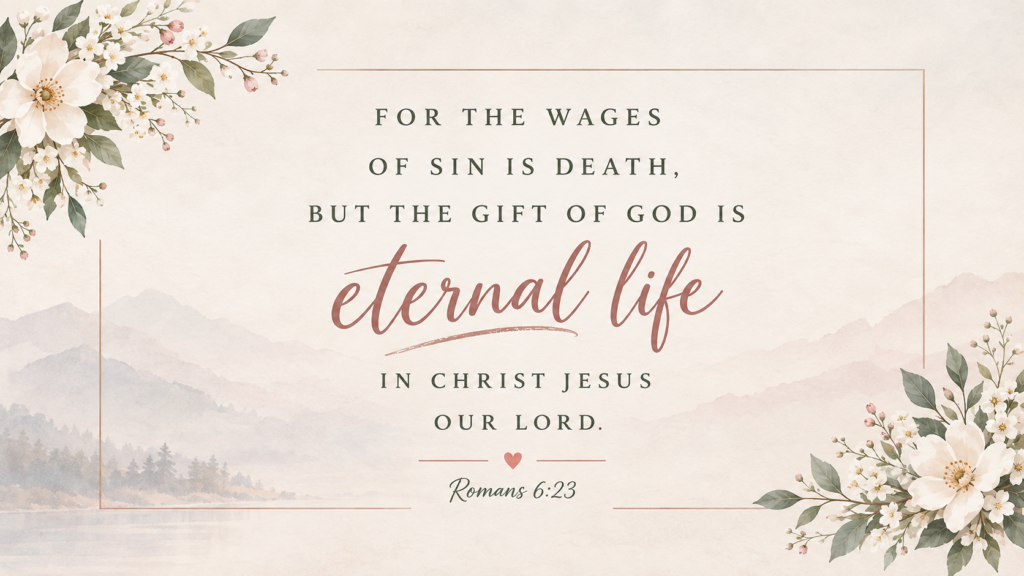
Romans 6:23 contains one of the clearest contrasts in the New Testament: “For the wages of sin is death; but the gift of God is eternal life through Jesus Christ our Lord.”
At first, these words may sound frightening. Yet For the Wages of Sin Is Death is not only a warning about the seriousness of sin. Romans 6:23 also points toward grace, hope, salvation, and the eternal life God offers through Jesus Christ.
Paul places two completely different outcomes side by side. Sin has a consequence, while God freely offers a gift. Understanding this contrast helps us see why Romans 6:23 remains one of the most meaningful verses for Christians today.
What Does “For the Wages of Sin Is Death” Mean?
The simplest meaning is this:
Sin leads to death, while God offers eternal life as a gift through Jesus Christ.
When Paul says “For the wages of sin is death,” he uses the familiar idea of wages to explain consequences. Wages are something a person receives as payment for work. In the ancient world, the word could refer to pay or provisions given to a soldier or worker.
Paul uses this picture to show that sin has a real outcome.
But the second half of Romans 6:23 changes the entire picture:
“But the gift of God is eternal life through Jesus Christ our Lord.”
Eternal life is not described as something we earn. It is described as a gift.
That difference is central to understanding Romans 6:23.
7 Powerful Truths About Romans 6:23
1. Sin Is More Serious Than We Often Realize
The Bible does not present sin as simply making an occasional mistake.
Sin involves turning away from God’s will and choosing a path that separates us from His purposes. Romans 6 describes sin as a powerful master that can control a person’s life.
This helps us understand why For the Wages of Sin Is Death is such a serious statement.
Paul is not merely talking about individual mistakes. He is showing where a life ruled by sin ultimately leads.
Sin can appear attractive for a moment. It may promise pleasure, independence, success, or satisfaction. Yet Scripture warns that its ultimate outcome is death.
Romans 6 therefore encourages us to look beyond the temporary appeal of sin and consider its lasting consequences.
2. “Wages” Shows That Sin Has a Consequence
Paul’s use of the word “wages” is important.
When someone receives wages, those wages are payment for something that has been done. Paul uses this familiar idea to describe the result of sin.
The point is not that God randomly chooses an unrelated punishment. Instead, Paul presents death as the fitting outcome of living under sin’s rule.
This gives Romans 6:23 a memorable contrast:
Sin → wages → death
Then Paul presents another path:
God → gift → eternal life
This contrast is one reason For the Wages of Sin Is Death is so powerful. It explains both the seriousness of humanity’s problem and the greatness of God’s grace.
The verse does not leave us with only bad news. It immediately directs our attention toward God’s gift.
3. Death in Romans 6:23 Is More Than Physical Death
Does Romans 6:23 mean that every time a person sins, physical death immediately follows?
No.
The verse points to a deeper consequence of sin. Physical death is part of the fallen human condition, but Paul’s argument in Romans 6 focuses strongly on the spiritual consequences of living under sin and the contrast between death and eternal life.
This is important when interpreting For the Wages of Sin Is Death.
Paul is not giving us a simple formula in which every individual sinful act produces immediate physical death. Instead, he describes two different ways of living and the ultimate outcomes associated with them.
One direction leads toward death.
The other leads toward life.
Romans 6:20–23 makes this contrast especially clear by comparing life under sin with a new life of freedom, service to God, holiness, and eternal life.
4. Romans 6:23 Is Also a Message of Grace
If the verse ended with the words “the wages of sin is death,” the message would be devastating.
But Paul continues:
“but the gift of God is eternal life through Jesus Christ our Lord.”
That little word “but” changes everything.
The message of Romans 6:23 is not simply that sin has consequences. It is also that God’s grace provides what human beings cannot earn for themselves.
This is the heart of the gospel.
We earn wages, but we receive a gift.
Salvation is not a paycheck for good behavior. Eternal life is God’s gracious provision through Jesus Christ.
That is why For the Wages of Sin Is Death should always be understood together with the second half of the verse. The warning and the promise belong together.
The verse shows the seriousness of sin while directing our attention toward the mercy of God.
5. Eternal Life Is Found Through Jesus Christ
Paul does not simply say that God gives eternal life.
He tells us where this life is found:
“through Jesus Christ our Lord.”
This is essential to understanding Romans 6:23.
Christian salvation is centered on Jesus Christ. The hope of eternal life is not based on human achievement, personal goodness, or religious performance. It is connected with Christ and what He has accomplished.
Romans 6:23 therefore moves our attention from the problem of sin toward the person of Jesus.
The verse can be summarized like this:
Sin brings death.
God gives life.
That life is found through Jesus Christ.
This is why For the Wages of Sin Is Death is not ultimately a hopeless message. The verse confronts us with the reality of sin, but it also points us toward God’s gracious answer.
6. Grace Does Not Mean We Should Continue Living in Sin
A natural question follows:
If eternal life is a gift, does the way we live still matter?
Romans 6 gives a clear answer: yes.
Paul begins the chapter by addressing the idea that people could continue living in sin because God’s grace exists. His response is a strong call toward a changed life.
Freedom from sin does not mean freedom to ignore sin.
Instead, it means freedom from sin’s control.
Romans 6:22 describes a new direction for believers: freedom from sin, service to God, holiness, and ultimately eternal life.
This gives greater meaning to For the Wages of Sin Is Death. The verse is not encouraging fear alone. It calls us to recognize the direction of our lives and to pursue the new life God offers.
Grace should produce gratitude.
Grace should encourage obedience.
Grace should lead us toward holiness.
7. Romans 6:23 Ends With Hope
Perhaps the most encouraging part of Romans 6:23 is that the verse does not end with death.
It ends with eternal life.
The movement of the verse is powerful:
Sin → Death
God’s gift → Eternal Life
And the source of that gift is:
Jesus Christ our Lord.
So For the Wages of Sin Is Death contains both a warning and an invitation.
It warns us not to treat sin lightly.
At the same time, it invites us to look beyond our failures toward God’s grace.
Romans 6:23 does not tell us that our failures are the end of the story. Instead, it points us toward the hope available through Christ.
Romans 6:23 in Context
To understand For the Wages of Sin Is Death properly, it helps to read Romans 6:23 in the context of the verses surrounding it.
Romans 6:20–21 looks back at life under sin and asks what benefit came from things that ultimately resulted in shame and death.
Romans 6:22 then describes a different direction: freedom from sin, service to God, holiness, and eternal life.
Verse 23 summarizes this contrast.
This means Romans 6:23 is not an isolated statement designed simply to frighten people. It is part of Paul’s larger argument about sin, freedom, obedience, and new life in Christ.
The surrounding chapter helps us see that Paul is asking readers to consider who controls their lives and where that path leads.
Wages or Gift: What Is the Difference?
One of the easiest ways to remember Romans 6:23 is to focus on the contrast between wages and gift.
| Sin | God |
|---|---|
| Produces death | Gives eternal life |
| Described as wages | Described as a gift |
| Leads toward death | Leads toward life |
| Connected with slavery to sin | Connected with freedom |
| Represents an earned consequence | Represents gracious provision |
Paul does not call eternal life the wages of righteousness.
He calls it a gift.
That distinction protects the central message of grace. Human achievement cannot purchase salvation. Eternal life comes from God through Jesus Christ.
This is one of the most important lessons contained in For the Wages of Sin Is Death.
What Does Romans 6:23 Teach Christians Today?
Romans 6:23 has several practical lessons for everyday Christian life.
Take Sin Seriously
Sin is not harmless. It has consequences and can damage our relationship with God and others.
Remember That Salvation Is a Gift
Good works matter in the Christian life, but eternal life is not something we purchase through our achievements.
Trust God’s Grace
Our failures do not make God’s grace meaningless. The second half of Romans 6:23 reminds us that God offers what we cannot earn.
Look to Jesus
The promise of eternal life is connected specifically with Jesus Christ.
Pursue Holiness
Grace should lead to gratitude, obedience, and a desire to live according to God’s will.
Share the Hope
Romans 6:23 contains both a warning and good news, making it useful for Bible studies, sermons, devotionals, prayer, and personal reflection.
Read Romans 6:23 in the Bible
For an authentic Bible reference, you can read Romans 6:23 in the King James Version on Bible Gateway.
Read Romans 6:23 in the KJV on Bible Gateway
When Can You Use Romans 6:23?
Romans 6:23 can be meaningful in many situations.
During Personal Bible Study
Use the verse as a starting point for studying sin, grace, salvation, freedom, and eternal life.
In a Christian Sermon
The contrast between wages and gift provides a simple framework for explaining the seriousness of sin and the hope of the gospel.
During Prayer
The verse can remind you to confess sin while also thanking God for His grace and mercy.
When Encouraging Someone
A person struggling with guilt may need to hear both sides of the message: sin is serious, but God’s gift of life is available through Christ.
For Evangelism
The verse gives a concise picture of humanity’s problem and God’s gracious answer.
FAQs About “For the Wages of Sin Is Death”
What does “the wages of sin is death” mean?
It means that sin has a serious consequence: death. Romans 6:23 immediately contrasts this consequence with God’s gift of eternal life through Jesus Christ.
Where is “the wages of sin is death” found?
The phrase is found in Romans 6:23 in the New Testament.
What are the wages of sin?
According to Romans 6:23, the wages of sin are death. Paul then contrasts death with God’s gift of eternal life.
What is the gift of God in Romans 6:23?
The gift of God is eternal life through Jesus Christ our Lord.
Does Romans 6:23 mean physical death?
Not exclusively. The contrast between death and eternal life points to a deeper spiritual reality rather than saying that every individual sinful act immediately causes physical death.
Why does Paul use the word “wages”?
“Wages” describe something received as payment. Paul uses this familiar concept to show what sin produces while contrasting it with God’s free gift.
Can eternal life be earned?
Romans 6:23 presents eternal life as God’s gift rather than something earned as wages.
How does Romans 6:23 relate to salvation?
It summarizes the contrast between sin’s deadly outcome and God’s gracious offer of eternal life through Jesus Christ.
Does God’s grace mean Christians can ignore sin?
No. Romans 6 connects God’s grace with freedom from sin and a new life of obedience and holiness.
What is the main message of Romans 6:23?
The main message is that sin leads to death, but God graciously offers eternal life through Jesus Christ.
Final Reflection: From Death to Life
For the Wages of Sin Is Death is a serious statement, but it is not the complete message of Romans 6:23.
Paul immediately gives us hope:
God gives eternal life through Jesus Christ.
That changes how we should read this verse.
Romans 6:23 is not simply a warning designed to make us afraid of sin. It calls us to recognize where sin leads while showing us the extraordinary grace God offers through Christ.
Sin promises much but ultimately produces death.
God offers something we could never earn: eternal life.
That is why For the Wages of Sin Is Death remains such a powerful message for Christians today. It confronts us with the seriousness of sin while pointing us toward the hope of the gospel.
The wages are death.
The gift is life.
And the gift is found in Jesus Christ.
LOOKING FOR SOME MORE ENGAGING CONTENT: